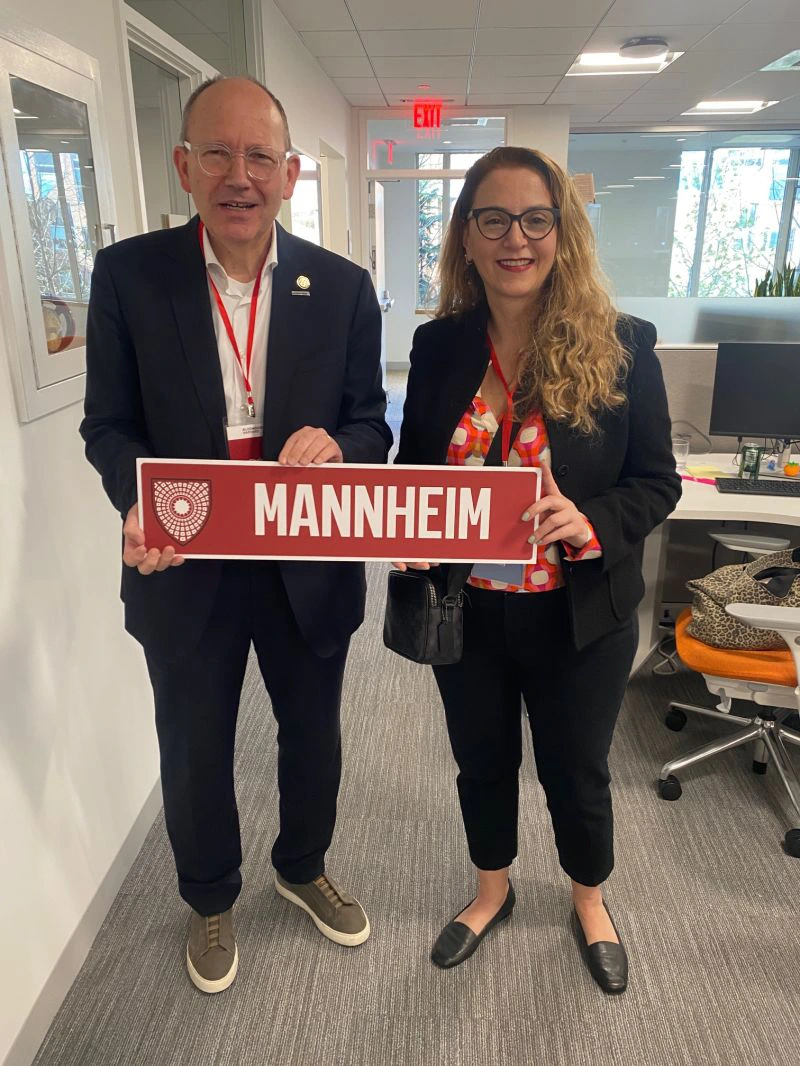
At the Bloomberg Center for Cities at Harvard University, the Mayor of Mannheim, Christian Specht, asked me a question that many cities across Germany are currently grappling with:
How do you teach a class when every child tells a different story?
In a highly diverse classroom, teaching goes far beyond the curriculum. Educators have to navigate multiple languages, varying levels of German proficiency, different reading and writing skills at home, and the constant challenge of building cohesion in a space where children are still learning how to belong. Retaining what is learned becomes difficult when content is not adapted to learners’ current levels. Engagement becomes difficult when students do not see themselves reflected in what they learn.
He was particularly interested in my perspective, shaped by more than 15 years as an award-winning children’s book author working on literacy and multilingualism, as well as my in-depth experience in management consulting and my current master’s studies in learning design, innovation, and technology.
In my view, AI can serve as a common denominator in super-diverse classrooms. It can adapt texts in real time to different reading levels, provide multilingual learning support, generate differentiated materials from a single lesson, and give every child a voice in a language in which they can express themselves.
What resonated most in our conversation was not a technology pitch, but a vision of how AI can support teachers in their daily work to create classrooms where every child can belong.