


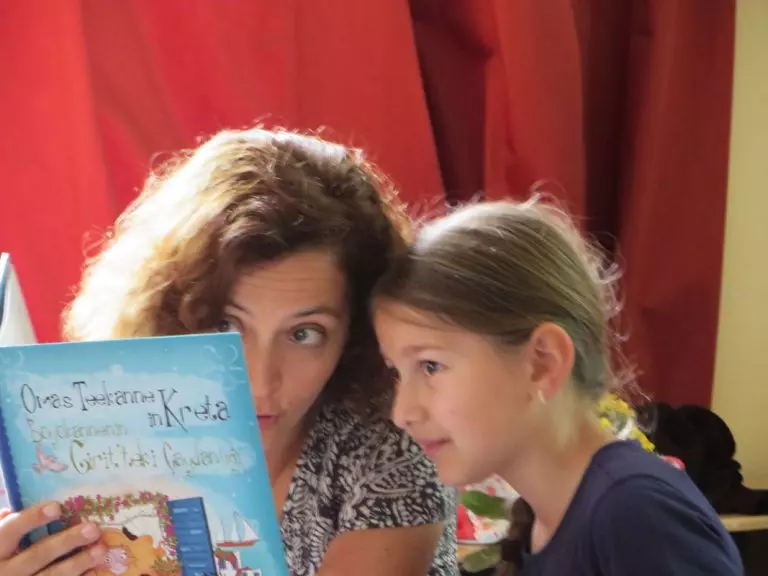
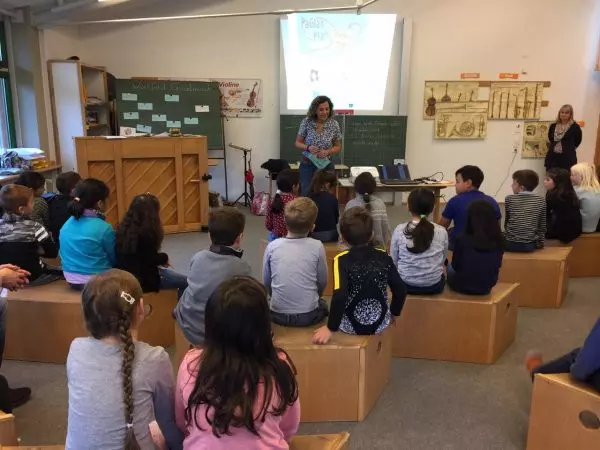
Can AI literacy be taught using printed children’s books? Why not? That’s exactly why I use a method I developed during my master’s program in Learning Design, Innovation, and Technology at Harvard University—a method that transforms shared reading, both in the classroom and at home, into a subtle training program. Instead of explaining artificial intelligence directly, reading aloud employs strategies that help children grasp the fundamental principle behind AI: recognizing patterns, organizing information, and making decisions understandable. Step by step, they learn to understand this invisible, data-driven machine objectively, to contextualize it sensibly, and to develop their own sense of agency in dealing with it. It is precisely this skill that is becoming increasingly important in school and, later, in everyday professional life.
From Children’s Books to Data Machines: How Reading Lays the Foundation for AI Literacy
What Children Learn in the Process
• Pattern recognition in images and stories
• Predictions and probability
• Bias and why AI can make mistakes
• Categories and similarities
• Human judgment, imagination, and emotion